
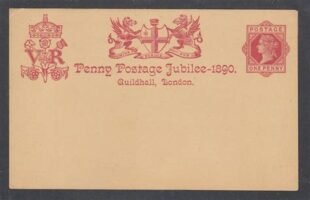
The first semi-postal issued was actually a postal card. The United Kingdom issued it in 1890 to raise money for a fund for postal workers. Maybe the USPS should look at doing something like this!
A semi-postal stamp (also called a charity stamp) is a postage stamp sold for more than its postal value. The extra amount, called a surcharge, is donated to a designated charitable, social, cultural, or public cause.
The first semi-postal item issued anywhere in the world was not a stamp but a British postal card issued in 1890 to commemorate the Uniform Penny Post Jubilee. The 1890 UK Penny Postage Jubilee postal card (Figure 1), is a fascinating precursor to modern semi-postal stamps. The card had a postal value of 1 penny, but it was sold for 6 pence, with the extra 5 pence contributed to a fund benefiting postal workers.
- Issue: Penny Postage Jubilee Postal Card
- Country: United Kingdom
- Year: 1890
- Postal value: 1d
- Selling price: 6d
- Surcharge: 5d
- Purpose: Raise money for postal employees’ welfare funds. [en.
This makes it especially important in postal history because:
- It predates the first true semi-postal stamps by several years.
- It demonstrates the concept of paying more than the postal value to support a charitable cause.
- It connects directly to the celebration of 50 years of Uniform Penny Postage (1840-1890) introduced through the reforms associated with Rowland Hill.
This is great philatelic trivia item because most collectors assume semi-postals began with stamps, when in fact the pioneer was a British postal card.