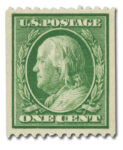
“Me” on stamps: Queen Elizabeth II
“Would you like to see my stamp collection?” she asked. “It is quite large and quite
valuable. It even includes a complete collection of me on stamps!”
“Would you like to see my stamp collection?” she asked. “It is quite large and quite
valuable. It even includes a complete collection of me on stamps!”
Hard White Paper
The “hard white” paper was a rag content paper used by both the National and Continental Bank Note Companies (#134-181). This is sometimes referred to as a thin to thick white wove paper on the 1870 to 1873 printings, and a yellowish wove paper on the 1875 printings.
Soft Porous Paper
The “soft porous” paper was a wood pulp paper used by the Continental Bank Note Company briefly in late 1878 to early 1879, and by the American Bank Note Company for all 1879 and later printings (#182-218). Because the American Bank Note Company took over the Continental Bank Note Company in 1879, including plates, paper and finished stamps, the soft porous paper is generally attributed to American Bank Note printings. All stamps issued between 1879 and 1894 were printed by the American Bank Note Company on this paper.
The “hard white” paper was a rag content paper used by both the National and Continental Bank Note Companies (#134-181). This is sometimes referred to as a thin to thick white wove paper on the 1870 to 1873 printings, and a yellowish wove paper on the 1875 printings.

Identification
There are two methods to identify the paper type, and occasionally it may be necessary to use both methods since one type of paper may show characteristics of the other type. To learn the paper types, it is easiest to begin with stamps of a known paper type. Any grilled issue and any stamp from the 1869 series will be on thin hard paper, while the 1890 Small Bank Note stamps and the Columbians will be on soft porous paper.
Easiest Method: The Flick Test
The traditional test is to flick the stamp close to your ear. Hold the stamp between your thumb and index finger, leaving about a half an inch protruding, and snap the stamp back and forth with the flick of a finger. Hard paper gives a sharp, loud sound, while soft paper gives a duller, less audible sound. However, this test is not terribly accurate and care must be taken to not damage the stamp.
More Accurate Method: Examination Under a Strong Light
Hold the stamp up to a strong light and examine a clear portion of the stamp, such as the margins, at various angles. The hard paper is translucent and has an even texture throughout, and is usually white. The soft paper appears mottled and opaque, with fibers typically bunched in a screen or mesh pattern, and is usually yellowish. Also, when viewed from the back, the design tends to show through on the hard paper.
| Thin hard paper | Soft porous paper |
|---|---|
![]() | ![]() |
Source: Kenmore Stamp Company
…a “liner” is the backing that a self-adhesive stamp is on when you buy the stamps. Now we have to figure out how we see the different types, A, B, C, and D.
The 31st St Louis Stamp Exp closed on March 24th, 2024 with over 400 paid attendees. The Greater Mound City Stamp Club was out in force showing off their matching club polo shirts. GMCSC Club members hold several key Expo show positions and the members at large provide help in setup, tear down, working registration and in the beginners’ room at the show. Enjoy some pictures from 2024 and we hope to see yet a bigger crowd in 2025!


As topical collectors, we don’t often think of collecting areas of modern (in philatelic terms
the 1970s are modern) topics like rock bands but we should.
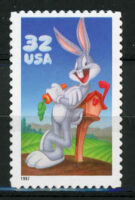
In 1997, the USPS issued the first stamp using a new technology called “scrambled indicia.” Indicia is pronounced /inˈdiSH(ē)ə/ and is the plural noun of the word indicum. In this use, it means “indication or token.”
The American Topical Association announces the opening of year four of its successful virtual exhibiting program, My One-Page Exhibit, starting December 15 and running through February 15, 2024. The exhibit program is free to enter and open to all. ATA membership is not required to participate.

Rather than offering judging or popularity votes, the program focuses on expression, storytelling and sharing. The previous three years’ entries realized hundreds of exhibits from countries around the globe. Many entries were submitted by ATA members giving the global philatelic family a glimpse of our topical and other philatelic interests. Submissions included exhibits from the United States, Australia, Canada, Germany, India, Peru, Austria, Italy, Columbia, Germany, and more. Exhibitors ranged from novice youths to international large gold recipients.
Literally a single page, either 8.5” x 11” or 11” x 17” in size, the exhibit represents an accessible way for newcomers to philatelic exhibiting to become engaged in this aspect of the hobby. For experienced one- and multi-frame competitive exhibitors, the My One-Page Exhibit Program provides a place to explore new themes and topics and share important stories.
My One-Page Exhibit is an opportunity for experienced exhibitors not only to create and share interesting items from their collections that may be outliers from their exhibits but also to take an active role in promoting exhibiting to those who want to try exhibiting for the first time.
The 2024 My One-Page Exhibit Program opens for entry submission on December 15, 2023 and closes on February 15, 2024. Exhibits will be submitted on the website – ataexhibits.com. Exhibit instructions and requirements are posted on the Program Rules page of the site. Exhibits in the 2024 program will be available for viewing on the website by April 1, 2024 and will remain online throughout the year. Visit ataexhibits.com for updates and details.
The story of Josephine Garis Cochran started when she was born on Mar.8, 1839, in Ashtabula County, Ohio, northeast of Cleveland. Her family influenced her to think outside of the box…
Another article in the collection of Dead Countries by Phil Schorr. Check out Elobey, Annobon, and Carisco.
A stamp from Belize, Scott #1017 issued November 19, 1993, features an accordion player in the center, surrounded by other musicians playing maracas, drums, a guitar, and an unfamiliar instrument, the quijada (key-YAH-dah) or ass’s jawbone.