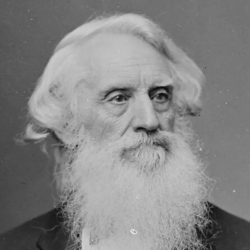
Samuel Finley Breese Morse (1791–1872) never sorted letters, carried a mailbag, or worked behind a postal counter — but he changed the U.S. Post Office more profoundly than almost any employee ever could. His invention of the electric telegraph and Morse code reshaped how the nation communicated, turning days‑long mail delivery into near‑instant transmission.
US #2869j – Wyatt Earp from the Legends of the West Sheet
On October 26, 1881, the Earp brothers took on the Clanton-McLaury Gang at the OK Corral in Tombstone, Arizona. The shootout became one of the most famous events in the Old West.
Tombstone had become one of the richest mining towns in the Southwest after silver was discovered nearby in 1877. Two years later, Wyatt Earp, a former Kansas police officer, and his brothers Morgan and Virgil moved to Tombstone to join in the silver boom and work as lawmen. Wyatt found a job as a bank security guard while Virgil became the town marshal.
US #1130 – The Earps originally came to Tombstone following a silver boom.
In July 1880, Virgil, a US marshal, was tasked with tracking a group of cowboys that had stolen six US Army mules (at that time, in the Tombstone area, the word cowboy referred to outlaws). Virgil requested to bring his brothers along on the hunt, and they found the stolen mules on the McLaury ranch, home to known cowboys. The McLaurys said they’d give the mules back but never did, and threatened the Earps that if they ever followed them again, they’d kill them.
Item #4902025 – Earp First Day Proof Card
Over the following year, the Earps had frequent run-ins with the McLaurys and the Clantons, who Earp believed stole his horse. Each time, the cowboys threatened to kill the Earps. Adding fuel to the fire, the cowboys were cohorts of the Cochise County Sheriff, Johnny Behan, who was a rival of Wyatt Earp’s – politically and in an affair of the heart.
US #2870 –The Controversial Legends of the West Error Sheet (Click the image to read the full story.)
Then, on October 25, 1881, Ike Clanton and Tom McLaury went to Tombstone for supplies. Over the course of 24 hours, they clashed with the Earps and their friend Doc Holliday. About 1:30 p.m. the next day, Billy Clanton, Frank McLaury, and Billy Claiborne rode into town. They found Holliday at the saloon, who was happy to tell them that their brothers had been pistol-whipped by the Earps.
US #2869 – The Reissued Legends of the West Stamp Sheet
The brothers left in a rage and claimed they’d get their vengeance. They found their brothers and gathered in an empty lot behind the OK Corral. The Earps and Holliday soon found them there and prepared to face off. The Earps and Holliday slowly advanced to stand within six feet of the cowboys. Moments later the deafening roar of gunfire filled the air. The gunfight lasted just 30 seconds, and only about 30 shots were fired. Many debate exactly how the shootout progressed, but generally believe it began with Virgil Earp shooting Billy Clanton in the chest. Next Doc Holliday shot Tom McLaury, and Wyatt shot Frank McLaury in the stomach. Two of the cowboys managed to fire on the lawmen before falling to the ground.
When the smoke cleared, three of the cowboys lay dead or dying, and the fourth was seriously wounded. Of the lawmen only Wyatt Earp emerged unscathed. Ike Clanton and Claiborne ran away. A local cowboy newspaper proclaimed, “The 26th of October, 1881, will always be marked as one of the crimson days in the annals of Tombstone, a day when blood flowed as water, and human life was held as a shuttle cock, a day to be remembered as witnessing the bloodiest and deadliest street fight that has ever occurred in this place, or probably in the Territory.”
US #UX187 – First Day Postal Card
Meanwhile, Sheriff Behan had witnessed the shootout and charged the Earps and Holliday with murder. The case went to trial, but a month later, the judge ruled that the men were not guilty and that they were “fully justified in committing these homicides.”
The shootout became part of the legend of the American West and had been recreated in a number of films and television shows.
US #1734 – The monument protects mounds built by Native American tribes between AD 400 and 1200.
Effigy Mounds National Monument in Iowa was established on October 25, 1949. The monument protects and interprets the history behind about 200 mounds built by Native Americans centuries ago.
Native Americans began settling in the “Driftless Area” of the Midwestern US during the late-woodland period. There were several tribes of mound builders in the United States, each with a unique culture and set of traditions. Some built simple, cone-shaped mounds used only for the burial of their dead. Others built effigies shaped like different animals or spirits. The purpose of the effigy mounds is harder to determine.
Archaeologists have several different theories on the significance of these structures. Some believe the effigies were built mainly for spiritual or religious reasons. This theory acknowledges the mounds’ use as burial sites, but only as a secondary purpose. Other archaeologists are more interested in the reasons behind the different animal shapes of each effigy. Most think the animal was meant to represent the tribe or family of the person, or people, buried in the mound. A few archaeologists wonder if the different animals symbolized a spirit that led the deceased to the next world.
US #1884 – Great Bear Mound is the largest in the monument, measuring 138 feet long.
The Effigy Mounds National Monument is home to approximately 200 mounds, 31 of which are effigies. Most effigy mounds within the monument are bird or bear designs. The largest effigy mound is called Great Bear Mound and is nearly 138 feet long and about three feet tall. The idea of preserving these pieces of history is a fairly new one.
US #3650 –The National Audubon Society designated the monument an Important Bird and Biodiversity Area.
Over the years, many mounds that could have been part of the monument were destroyed by farming or excavation. Between 1950 and 1960, archaeologists wanted to study the contents of the mounds, but their techniques weren’t as delicate as the ones of today. These studies led to the disturbance and destruction of many mounds. Regardless of whether a mound is completely or only partially excavated, the process greatly reduces or destroys the structure’s value as a historic object. Archaeologists eventually began to question their actions, and most of the mounds were saved.
Item #CNIAEM25D – 2017 Effigy Mounds National Monument Quarter from the Denver Mint
The Effigy Mounds National Monument was established on October 25, 1949. The proclamation, signed by President Harry Truman, granted the monument its original plot of land. In the next few decades, there were several expansions of the original property. Eventually, the monument grew to an impressive 2,526 acres.
As an added protective measure, in 1959, the National Park Service (NPS) issued a policy forbidding any more destruction of the mounds. They still allowed archaeologists to study them, but only using methods that did not disturb their overall structure. By 1970, this policy led to the focus of the park shifting to preserving the mounds and exploring the history of their builders.
Item #CNIAEM25P – 2017 Effigy Mounds National Monument Quarter from the Philadelphia Mint
A decade later, NPS began reaching out to local Native American groups with connections to the original mound builders. The park service hoped to uncover why the mounds were built and what their significance was. The passing of the Native American Graves Protection and Repatriation Act helped this cause tremendously. This act required any federal agencies or museums with Native American remains to reach out to their living descendants or related peoples. The conversations inspired by this law helped piece together the history of the mound builders and the significance of their creations.
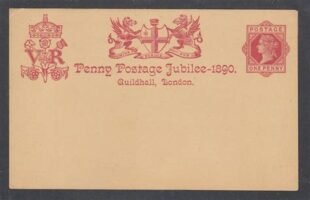
The first semi-postal issued was actually a postal card. The United Kingdom issued it in 1890 to raise money for a fund for postal workers. Maybe the USPS should look at doing something like this!
Born on October 24, 1911, Saunders Terrell became Sonny Terry, a blues harmonica player known for making his instrument sound like trains, hounds, and other voices. After childhood accidents left him blind, he built a career that took him from local churches and dance halls to Carnegie Hall and concert stages around the world.
Terry was born near Greensboro, Georgia, to a farming family. His father, Ruben, played harmonica in the evenings and eventually taught his son blues tunes. He also showed him how to imitate train whistles and baying dogs. Terry was injured in two accidents, one when he was 11 and another at 16. The second left him blind. Unable to continue farm work, he began playing harmonica in churches and dance halls. At 19, he joined traveling medicine shows, performing in towns across the South.
US #3214 – Mystic First Day Cover
Terry became part of the folk music revival of the late 1950s. He toured Europe and performed and recorded with musicians such as Woody Guthrie and Pete Seeger. He also appeared on Broadway. He was in the cast of Finian’s Rainbow in 1947 and Cat on a Hot Tin Roof in the 1950s. Later, he and McGhee performed in the Steve Martin comedy The Jerk. Terry also appeared in The Color Purple and played harmonica on Ry Cooder’s “Walkin’ Away Blues” for the 1986 film Crossroads.
US #3214 – Fleetwood First Day Cover
By the early 1930s, Terry was living in Durham, North Carolina. He played at tobacco warehouses, fish fries, house parties, and on the street. In 1934, he met guitarist and singer Blind Boy Fuller. The two performed together, and Terry accompanied Fuller on recordings beginning in 1937. Terry also made recordings under his own name. In 1938, he performed at Carnegie Hall as part of John Hammond’s From Spirituals to Swing concert. The next day, folklorist Alan Lomax recorded Terry for the Library of Congress, including his versions of “Fox Chase” and “Lost John.”
US #3213 – Terry added his distinctive harmonica to Guthrie’s folk songs, including “Lost John,” a track later included on Struggle. He also recorded with Guthrie and singer Cisco Houston, blending blues harmonica with Guthrie’s songs about working people.
After Fuller died in 1941, Terry formed a long-running partnership with guitarist and singer Brownie McGhee. They moved to New York and performed together for decades, recording blues, folk songs, and ballads. Their 1958 album Brownie McGhee and Sonny Terry Sing was their first for Folkways Records. Terry and McGhee also appeared together on radio, in stage shows, and on television. Their partnership lasted about 40 years, though they split for a time around 1970 and later reunited for performances.
Terry’s sound was immediately recognizable. He played fast, high notes and added whoops, moans, and sharp cries. He cupped his hands around the harmonica to shape its tone and used a cross-note technique to play in keys beyond the instrument’s basic range. In “Fox Chase,” he used his harmonica and voice to suggest a hunt, complete with the sounds of hounds. “Lost John” shows his control of breath and rhythm.
US #5708 – Terry and Seeger brought harmonica, banjo, and vocals together for a Carnegie Hall performance in 1957, later released as an album. Their lively, audience-friendly folk style is heard on songs such as “Bottle Up and Go.”
In 1982, Terry received a National Heritage Fellowship from the National Endowment for the Arts, the nation’s highest honor in folk and traditional arts. He continued recording into the 1980s, including the album Whoopin’, released in 1984. Terry died on March 11, 1986, at age 74. His energetic harmonica style helped carry blues into folk clubs, concert halls, and recordings heard by audiences far beyond the South.
US #1024 pictures a future farmer, wearing a jacket with the organization’s emblem, standing before a farm with rolling hills in the distance.
On October 13, 1953, the US Post Office issued a 3¢ stamp honoring the 25th anniversary of the Future Farmers of America. It was issued at the place the organization was founded – Kansas City, Missouri.
US #1024 – Classic First Day CoverItem #57345C – Jimmy Carter was part of the FFA and later hosted organization leaders when he was president.
The Smith-Hughes Vocational Education Act was passed in 1917 to give federal funds to states for high school classes in certain vocations – agriculture, family and consumer sciences, trades, and industries. Just a few years later, in the early 1920s, Virginia created a Future Farmers of Virginia Club for the boys in those agriculture classes. Over time, other states created their own Future Farmer organizations.
As more of these state groups were formed, they realized the next step would be to create a national organization. Therefore, in 1928, a group of these agriculture students met in Kansas City, MO, for the third annual National Congress of Vocational Agriculture Students. During that convention on November 20, 33 students from 18 states met at the Baltimore Hotel in Kansas City and officially formed the Future Farmers of America.
US #4789 – Johnny Cash was in the FFA in the mid-to-late 1940s.
Also known as the FFA, the organization they founded provided support for agricultural education and leadership training for high school students. After granting charters in 48 states across the US, the National FFA Foundation was established in 1944.
US #4470 – Garfield creator Jim Davis was chapter president in the FFA.
Four years later, the FFA participated in an international exchange program with the Young Farmers Club of Great Britain. Today, the FFA sends more than 350 students to 25 countries annually to share knowledge and promote agricultural careers. In the US and its territories, there are 735,038 (685,226 of whom are alumni) members in 8,817 chapters, making it one of the largest youth organizations in the country.
On October 12, 1901, the Executive Mansion, the president’s official residence and workplace, was renamed the White House.
In 1792, President George Washington held a public competition to find a design for the president’s home and office in Washington, DC. Thomas Jefferson was among those that submitted designs, but James Hoban created the winning plan.
US #1338A was the first multi-colored coil stamp.
Hoban’s design incorporated features of several Irish and French country homes. The cornerstone was laid on October 13, 1792. Though Washington oversaw the building’s construction, he retired from the presidency before it was completed. On November 1, 1800, John Adams and his wife became the first presidential couple to live in the building, though it was still unfinished.
US #2609 was issued for the White House’s 200th anniversary.
At this time, the building was often referred to as the President’s House. Over time, it would also be called the President’s Palace and the Presidential Mansion. Many opposed use of the word palace because it had indicated royalty. The first known use of the term “White House” appeared around 1811.
In fact, there has been a popular myth that the building was first called the White House after the War of 1812. During that war, the British burned much of Washington, DC, including the President’s House. A common tale claimed that after American forces reclaimed the capital and worked on repairing it, they painted the building white to cover the burn marks. While there are records of the building being called the White House before the war, its use did increase after the war.
US #3445 was issued for the 200th anniversary of the Adamses moving into the White House.
While some would start to call it the White House, the official name had been the Executive Mansion since 1810. This was the phrase that appeared on letterheads and official documents.
US #UX143 – White House Postal Card
That name would remain in official use for over 90 years. Then on October 12, 1901, President Theodore Roosevelt decided to officially change the name to that one used for decades. He ordered that all White House stationary now read “White House – Washington.” Though the stationary would have a slight change, with Washington being centered under White House, the named has remained in use ever since.
Item #59260A – 1992 White House Bicentennial Coin Cover
US #965 was designed to resemble the Famous Americans stamps.
Supreme Court Justice Harlan Fiske Stone was born on October 11, 1872, in Chesterfield, New Hampshire. He served on the court for over 20 years, including over four years as chief justice.
Stone attended Amherst College before earning his bachelor of law degree from Columbia Law School in 1898. He practiced law in New York City for a few years before returning to Columbia as a teacher and later the dean.
During World War I, Stone served on the War Department’s board of inquiry, reviewing nearly 3,000 cases of conscientious objectors that had been denied by their draft boards. After the war, he grew increasingly unhappy at Columbia and resigned his deanship, joining a prestigious New York law firm.
US #965 – Classic First Day Cover
In 1924, President Calvin Coolidge (who had known Stone at Amherst) appointed him US attorney general. Coolidge believed Stone would be a fitting person to oversee all of the investigations into the scandals of the Harding administration. Among his first acts in this new office was appointing J. Edgar Hoover to head of the Department of Justice’s Bureau of Investigation (later the FBI).
US #965 – Fleetwood Plate Block First Day CoverUS #1343 – Under Stone’s leadership, the FBI became the most efficient police organization in the country.
Stone directed Hoover to model the agency after Britain’s Scotland Yard, and it soon was more efficient than any other police organization in the nation. As attorney general, Stone personally argued many of the department’s cases in federal court and led an anti-trust investigation into the Aluminum Company of America (Alcoa).
Following the election of 1924, Justice Joseph McKenna resigned from the Supreme Court. Early the next year, President Coolidge nominated Stone to replace him as an associate justice. He was confirmed a month later by a vote of 71 to 6.
US #965 – Plate Block First Day CoverUS #1894 – Stone served as chief justice of the court from 1941 to 1946.
During Stone’s first few years on the court, much of its focus was on the relationship between businesses and government. Though he was a conservative, Stone often sided with the liberal justices. In the 1930s, he, Louis Brandeis, and Benjamin Cardozo became known as the Three Musketeers of the Supreme Court. They supported President Roosevelt’s New Deal, even as the other justices opposed it.
In 1941, Roosevelt nominated Stone for chief justice to replace the exiting Charles Evans Hughes. He remained in the post until his death. During Stone’s years as chief justice, views of Constitutional laws were changing. Frequently, the court was divided. Although Stone was a conservative, he often voted to uphold liberal measures. In 1946, Stone suffered a cerebral hemorrhage and died on April 22.
US #4525 features a painting based on a 1958 photo.
Stage and screen actress Helen Hayes was born on October 10, 1900, in Washington, DC. Dubbed “The First Lady of the American Theater,” she’s one of just 23 people to win competitive Emmy, Grammy, Oscar, and Tony awards (often referred to as EGOTs).
Hayes’s grandparents had come to America during the Irish Potato Famine of the mid-1800s. Her mother was an aspiring actress and her father worked a number of odd jobs, including as a clerk at the Washington Patent Office.
From a young age, Hayes was drawn to performing on stage. At the age of five she made her stage debut singing at Washington’s Belasco Theatre (across the street from the White House). By the time she was 10, Hayes had appeared in her first short film, Jean and the Calico Doll.
Meanwhile, Hayes also attended prestigious schools, such as the Dominican Academy in New York City. While there, she appeared in The Old Dutch, and Little Lord Fauntleroy, among other plays. She graduated from the Academy of the Sacred Heart Convent in 1917. Hayes married playwright Charles MacArthur in 1928 and soon moved to Hollywood after he signed a studio deal.
US #4421 – Cooper was the 15th honoree in the Legends of Hollywood Series.
Hayes made her first sound film in 1931 – The Sin of Madelon Claudet. She won the Academy Award for Best Actress for playing the film’s title role. She went on to star in such other Hollywood films as Arrowsmith (with Ronald Colman), A Farewell to Arms (with Gary Cooper), The White Sister (with Clark Gable), What Every Woman Knows (which she’d previously done on Broadway) and Vanessa: Her Love Story.
Great Britain #BLACK1 – The world’s first postage stamp pictures Queen Victoria.
Despite her success as a Hollywood film actress, Hayes was more comfortable with the stage. In fact, she once said, “I don’t think I’m much good in pictures… I have a beautiful dream I’m elegant on stage.” So in 1935, Hayes returned to New York. For the next three years she held the title role of Victoria Regina alongside Vincent Price. Hayes played England’s queen. Victoria’s namesake, the queen of Spain, was reportedly quite impressed by Hayes’s complete mastery of her grandmother’s mannerisms.
Years later, Hayes worked on the Broadway revival of J.M. Barrie’s (best known for Peter Pan) play, Mary Rose. Then in 1952 Hayes became the first person to win the Sarah Siddons Award for her performances and support of Chicago theaters. She would win the award again in 1969.
US #4525 – Colorano Silk Cachet First Day Cover
Hayes returned to Hollywood in the 1950s and found even greater success. She starred in My Son John and Anastasia (along side Ingrid Bergman). She later won an Academy Award for Best Supporting Actress in Airport. After that Hayes appeared in a number of Disney films including Herbie Rides Again, One of Our Dinosaurs is Missing, and Candleshoe. Hayes made her last Broadway appearance in the 1970 revival of Harvey.
US #3187a – from the Celebrate the Century Sheet
Throughout her career, Hayes took time off from acting to care for her sick husband and following the death of her daughter to polio in 1949. In her grief, Hayes founded the Mary MacArthur Fund to help fight the disease. Doctor Jonas Salk credited Hayes with helping to fund his lifesaving vaccine.
In 1955, the Fulton Theatre in New York City was renamed the Helen Hayes Theatre. However, in the 1980s businessmen wanted to demolish the building to construct a hotel. Though she had no stake in the building, they asked for her consent, which she granted. Parts from the theater were later used in the Shakespeare Center. Two other theaters were later renamed in Hayes’s honor. There is also a Helen Hayes Award for theater in Washington, DC.
Hayes is often called the “First Lady of the American Theatre,” though it’s unknown just where or when this title originated. Her friend Katherine Cornell has also received this title, and both women believed the other deserved it. As one critic put it, “Cornell played every queen as though she were a woman, whereas Hayes played every woman as though she were a queen.”
Hayes was also friends with First Lady Lady Bird Johnson. Together they founded the National Wildflower Research Center (now the Lady Bird Johnson Wildflower Center) in Austin Texas in 1982. Today the center is one of the top advocates for rare and at-risk plant species.
US #4716 was issued for Lady Bird Johnson’s 100th birthday.
In her later years, Hayes devoted her time to writing and philanthropy. She was a founding member of the Riverside Shakespeare Company and on the board of directors for the New York Council of the Girls Scouts. She also made brief returns to the stage for benefits at the Shakespeare Center where she and several other performers read aloud A Christmas Carol. Hayes’s most devoted work though, was the Helen Hayes Rehabilitation Hospital. She began working with the hospital in the 1940s and joined its Board of Visitors in 1944. Over the years she worked tirelessly to secure the hospital funding, spearhead fund-raising events, and making numerous personal appearances. The hospital was named in her honor in 1974 and she remained on the board until her death.
US #4525 – Fleetwood First Day Cover with Digital Color Cancel
Having long suffered health issues, Hayes died on March 17, 1993. That day, the lights of Broadway were dimmed in her honor. Hayes is one of just 23 people to win competitive Emmy, Grammy, Oscar, and Tony awards (often referred to as EGOTs). Hayes also received the Presidential Medal of Freedom, America’s highest civilian honor, as well as the National Medal of the Arts.