Know the Facts About Fentanyl
Bethesda, MD 20814

Bethesda, MD 20814
Williamstown, MA 01267
New Orleans, LA 70113
The width of the black border on a mourning cover indicates how close the relationship was to the deceased and the depth of grief. Mourning covers were used throughout the world. They are still used, although rarely, today.
The GMCSC Library book sale will be held on the Club Website starting Oct. 12th, 2026, and you MUST LOG IN to buy books.
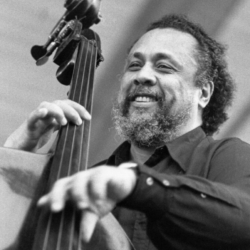
Before Charles Mingus became one of the most influential figures in 20th‑century jazz, he held a steady, ordinary job that grounded him long before fame found him: he worked for the U.S. Postal Service. It’s a surprising chapter in the life of a man better known for explosive creativity, uncompromising artistry, and a legacy that reshaped American music.


On September 28, 1990, the US Postal Service issued two stamps commemorating the Compacts of Free Association with the Federated States of Micronesia and the Republic of the Marshall Islands. The stamps marked a relationship that recognized the two Pacific territories as self-governing and sovereign while maintaining close ties with the United States.
The story began after World War II. Japan had controlled many islands in the western Pacific under a League of Nations mandate before the war. After Japan’s defeat, the United Nations created the Trust Territory of the Pacific Islands in 1947. The United States administered this strategic trusteeship. It included the Marshall Islands, the Caroline Islands, and the Northern Mariana Islands. Over time, the Caroline Islands developed into the Federated States of Micronesia and Palau.

The Trust Territory was not a single future country. Its island districts had different languages, histories, political goals, and relationships with the United States. During the 1970s and 1980s, local leaders and US officials negotiated separate political arrangements.
The Northern Mariana Islands chose a commonwealth relationship in political union with the United States. Its covenant took effect in 1978. Palau negotiated a Compact of Free Association but did not become independent until 1994, when its compact entered into force. The Federated States of Micronesia and the Republic of the Marshall Islands chose free association.

A Compact of Free Association did not make Micronesia or the Marshall Islands US territories. Each adopted its own constitution and government, controlled its internal affairs, and became sovereign. The agreements also provided US financial assistance and gave the United States responsibility for defense and security. In return, the United States retained certain strategic rights in the region.
The Compact with the Marshall Islands entered into force on October 21, 1986. The Compact with the Federated States of Micronesia followed on November 3. The United States formally recognized both countries as independent that year. The agreements ended their former status as United Nations trust territories, although the United Nations did not formally terminate the trusteeship for all of the former territory until later.

The 1990 stamp issue was a coordinated release involving the United States, the Federated States of Micronesia, and the Marshall Islands. The Postal Service issued a se-tenant pair of 25-cent stamps, meaning the two designs were printed attached to one another. Micronesia issued a strip of three stamps, while the Marshall Islands issued one stamp, bringing the total to six related designs.
The US stamp for Micronesia paired the Micronesian flag with the US flag and the USS Constitution. The Marshall Islands stamp showed that country’s flag, a traditional canoe, and a stick chart. Marshallese navigators made stick charts from thin coconut ribs and shells. The charts helped teach how ocean swells, currents, and islands related to one another across long distances.

All six stamps were dedicated on September 28, 1990, at the Dean Acheson Auditorium in the US Department of State in Washington, DC. Additional ceremonies took place in Palikir, Pohnpei, and in Majuro, the capital of the Marshall Islands. The joint issue used postage stamps to recognize a diplomatic arrangement while also highlighting Pacific navigation traditions and national symbols.
Click here to read the text of the compact.
| FREE printable This Day in History album pages Download a PDF of today’s article. Get a binder or other supplies to create your This Day in History album. |
Discover what else happened on This Day in History.
The post Marshall Islands and Micronesia Joint Issue appeared first on Mystic Stamp Discovery Center.

On September 27, 1962, Rachel Carson published Silent Spring, a book that challenged Americans to consider what happened after pesticides were sprayed. Drawing on scientific studies, government records, and reports from affected communities, Carson argued that chemicals meant to kill insects could also disrupt entire ecosystems.
Carson was born on May 27, 1907, in Springdale, Pennsylvania. She developed an interest in writing as a child, but she also loved the natural world around her family’s small farm. At the Pennsylvania College for Women, now Chatham University, she began as an English major before changing to biology. She graduated in 1929 and later earned a master’s degree in zoology from Johns Hopkins University.

In 1935, Carson began writing radio scripts for the US Bureau of Fisheries, a predecessor of today’s US Fish and Wildlife Service. The following year, she became a junior aquatic biologist. She was one of the first women hired by the agency through the civil-service system. Her work included writing reports, editing publications, and explaining marine science to the public. She remained with the federal government for 15 years and eventually became editor-in-chief of its publications.
Carson also wrote books about the sea. Under the Sea-Wind appeared in 1941. The Sea Around Us, published in 1951, became a bestseller and won the National Book Award for nonfiction. Its success allowed her to leave government service in 1952 and write full time. Her third sea book, The Edge of the Sea, followed in 1955. These books established her as a careful researcher who could explain science in clear, vivid language.

During the 1940s and ’50s, the United States widely used synthetic pesticides. DDT had helped control insect-borne disease and protect crops. Yet it also persisted in the environment. Carson became concerned that pesticides were being applied over large areas with too little attention to their effects on birds, fish, mammals, beneficial insects, soil, and water.

Her investigation began in earnest after a 1958 letter from Massachusetts writer Olga Owens Huckins. Huckins described birds dying after aerial spraying for mosquitoes near her property. Carson spent four years examining scientific research and consulting specialists in toxicology, ecology, medicine, entomology, and wildlife biology. She did not argue that every pesticide use should end. Instead, she criticized indiscriminate spraying and urged more selective methods, stronger oversight, and greater use of biological controls.
Silent Spring first appeared in three installments in The New Yorker during the summer of 1962. Houghton Mifflin published the book on September 27. Its title referred to a spring in which birds no longer sang because poison had moved through the food chain. Carson described insecticides such as DDT, dieldrin, and heptachlor as chemicals capable of remaining in soil and water, accumulating in animals, and affecting species beyond their intended targets.

The book faced a forceful response from chemical manufacturers and some agricultural interests. Critics questioned Carson’s scientific qualifications and accused her of opposing modern agriculture. Carson answered that pest control should be judged by its long-term consequences, not only by its immediate results. Her documentation helped bring a technical subject into public debate.
President John F. Kennedy asked his Science Advisory Committee to examine pesticide issues after the book appeared. Its 1963 report supported the need for stronger controls and further research. Carson also testified before a Senate subcommittee in June 1963. That year, she received the Audubon Medal and the Cullum Medal from the American Geographical Society.

Carson died of breast cancer on April 14, 1964, less than two years after Silent Spring was published. She did not live to see the Environmental Protection Agency created in 1970 or the EPA’s 1972 cancellation of most remaining US crop uses of DDT. Those actions resulted from scientific research, public concern, legal challenges, and government decisions over many years. Still, Silent Spring played a major role in widening public concern about pesticide regulation and environmental contamination.
Click here to read some of Silent Spring.
| FREE printable This Day in History album pages Download a PDF of today’s article. Get a binder or other supplies to create your This Day in History album. |
Discover what else happened on This Day in History.
The post Rachel Carson’s Silent Spring appeared first on Mystic Stamp Discovery Center.

George Gershwin was born Jacob Gershwine on September 26, 1898, in Brooklyn, New York. A successful composer and pianist, he created beloved orchestral compositions, popular jazz standards, as well as Broadway and Hollywood hits.

Born to Russian immigrants, George was the second of four children. His older brother Ira would also grow up to be a songwriter. The family moved frequently as their father explored a variety of business ventures. They spent most of their childhood in the Yiddish Theater District. George and Ira often went to local Yiddish theaters and George occasionally performed on stage as an extra.
Gershwin showed little interest in music until he was 10 years old. It was at that time he heard a friend play violin and was moved by the sound. Shortly after, his parents bought Ira a piano, but George ended up falling in love with it and playing it more. George then sought out a piano teacher, studying under Charles Hambitzer until 1918.

Gershwin dropped out of school at 15 to work as a song plugger in New York’s Tin Pan Alley. He was paid $15 a week to perform songs to help sell sheet music. Gershwin then published his first song, “When You Want ‘Em, You Can’t Get ‘Em, When You’ve Got ‘Em, You Don’t Want ‘Em,” in 1916, earning 50¢. That same year he began producing hundreds of songs for different music roll companies and self-playing pianos.
Gershwin briefly worked in vaudeville and found some success with his 1917 ragtime song, “Rialto Ripples.” He got his first national hit in 1919 with “Swanee,” which was made popular by performer Al Jolson. The first production for which he wrote the entire score was La, La Lucille (1919). Gershwin then collaborated with William Daly on the Broadway musicals Piccadilly to Broadway (1920), For Goodness’ Sake (1922), and Our Nell (1923).

Gershwin then composed his first major composition, Rhapsody in Blue, in 1924. It became his most popular work, emphasizing his talent for blending different musical styles, such as jazz and classical. In 1922, he worked on the experimental jazz opera, Blue Monday.
In the 1920s, Gershwin went to Paris for a while to study under French composers, but was turned down. Maurice Ravel told him, “Why become a second-rate Ravel when you’re already a first-rate Gershwin.” While in France, Gershwin wrote An American in Paris, which went on to become an American and European standard.

Over the course of his career, George and his brother Ira collaborated on more than 20 productions, including Lady Be Good (1924), Oh, Kay! (1926), Funny Face (1927), Strike Up the Band (1927), Show Girl (1929), and Girl Crazy (1930). These included popular songs “Embraceable You” and I Got Rhythm.” Their 1931 musical Of Thee I Sing became the first musical comedy to win the Pulitzer Prize for Drama.

In the summer of 1934, Gershwin visited DuBose Heyward, author of the novel Porgy. Gershwin was inspired by this meeting to compose the music for the opera Porgy and Bess (1935). It was initially a commercial failure, as critics couldn’t decide if it was an opera or Broadway musical. It eventually became the most popular opera written by an American composer.

In 1935, Gershwin moved to Hollywood, California, and turned his attention to films. He wrote Shall We Dance for Fred Astaire and Ginger Rogers, and A Damsel in Distress for Astaire, Joan Fontaine, and Gracie Allen. In 1937, Gershwin began suffering from painful headaches, coordination issues, and blackouts. He collapsed on the night of July 9 and was rushed to the hospital where doctors discovered he had a brain tumor. They rushed a neurosurgeon across the country to remove it, but Gershwin died on July 11, 1937 at just 38 years old. His death at such a young age was a shock to the world. A memorial concert was held at the Hollywood Bowl that September.
Listen to several Gershwin tunes here.
| FREE printable This Day in History album pages Download a PDF of today’s article. Get a binder or other supplies to create your This Day in History album. |
Discover what else happened on This Day in History.
The post Birth of George Gershwin appeared first on Mystic Stamp Discovery Center.