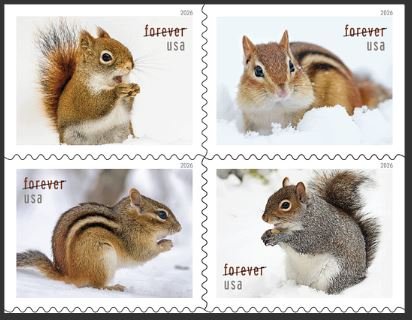
Squirrels and Chipmunks in the Snow
Brookfield, WI 53005

Brookfield, WI 53005


Shel Silverstein was born Sheldon Allan Silverstein on September 25, 1930, in Chicago, Illinois. Before he became known for children’s poetry, he had worked as a military cartoonist, a magazine illustrator, a playwright, a recording artist, and a songwriter.
Silverstein grew up on Chicago’s Northwest Side. He attended Roosevelt High School and briefly studied at the University of Illinois before leaving college. He later attended the Chicago Academy of Fine Arts. As a teenager, he began drawing cartoons because, as he later explained, he was not interested in sports and did not have a car. Drawing gave him a way to create his own world on paper.

In 1953, Silverstein was drafted into the US Army. He served in Japan and Korea and became a cartoonist for the Pacific edition of Stars and Stripes, the military newspaper. From 1954 to 1956, he drew the comic feature Take Ten. The experience gave him regular deadlines and a wide audience. He later said his work for Stars and Stripes helped launch his career.
After leaving the Army, Silverstein began selling cartoons to magazines. He also published collections of adult humor and drawings, including Take Ten and Now Here’s My Plan. His early work was often aimed at adults and could be satirical, dark, or irreverent.


Music became another part of his career. Silverstein wrote songs in folk, country, and popular styles. He wrote “A Boy Named Sue,” which Johnny Cash recorded live at San Quentin State Prison in 1969. Cash’s recording became a major hit and won a Grammy Award for Best Country Vocal Performance, Male. Silverstein also wrote “The Cover of ‘Rolling Stone,’” recorded by Dr. Hook & the Medicine Show; “One’s on the Way,” recorded by Loretta Lynn; and “The Ballad of Lucy Jordan,” later recorded by several artists.
Silverstein did not originally plan to write for children. The illustrator and author Tomi Ungerer introduced him to Ursula Nordstrom, the influential children’s-book editor at Harper & Row. Nordstrom believed Silverstein’s spare drawings and unusual sense of humor could work for young readers. Their collaboration led to books that used few words, black-and-white line drawings, and open-ended stories.

In 1963, Silverstein published Lafcadio, the Lion Who Shot Back, about a lion who leaves the wild to become a famous performer. The next year brought The Giving Tree, the story of a boy and a tree whose relationship changes as the boy grows older. The book has been interpreted in different ways. Some readers see a story of generosity, while others focus on its unequal relationship and the tree’s losses. Silverstein did not offer a single moral explanation for it.
His poetry collections brought his work into classrooms and libraries. Where the Sidewalk Ends, published in 1974, combined poems and drawings about children, animals, school, fears, wishes, and impossible situations. “Sick” follows a child inventing increasingly strange excuses to avoid school. “Sarah Cynthia Sylvia Stout Would Not Take the Garbage Out” turns a household chore into an outrageous disaster. Silverstein’s illustrations often supplied a second joke or changed how a poem could be read.
A Light in the Attic followed in 1981. It became one of the most successful poetry books for children of its era and spent years on The New York Times bestseller list. Silverstein recorded an album of poems from Where the Sidewalk Ends, which won a Grammy Award for Best Recording for Children in 1984. His later books included Falling Up in 1996 and The Missing Piece and The Missing Piece Meets the Big O, two fable-like stories about independence and relationships.

Silverstein kept a low public profile and rarely gave interviews in his later years. He died of a heart attack at his home in Key West, Florida, on May 10, 1999, at age 68. In 2005, Runny Babbit, a collection of poems built around switched beginning sounds in words, was published after his death.
| FREE printable This Day in History album pages Download a PDF of today’s article. Get a binder or other supplies to create your This Day in History album. |
Discover what else happened on This Day in History.
The post Birth of Shel Silverstein appeared first on Mystic Stamp Discovery Center.

Francis Scott Key Fitzgerald was born on September 24, 1896, in St. Paul, Minnesota. He would become one of the best-known writers of the Jazz Age, recording its energy, wealth, restlessness, and disappointments in novels and short stories.

Fitzgerald was named for a distant relative on his father’s side, Francis Scott Key, who wrote “The Star-Spangled Banner.” His parents were Edward and Mary McQuillan Fitzgerald. Two years after his birth, the family moved to Buffalo, New York, where his father worked for Procter & Gamble. They also lived for a time in Syracuse before returning to St. Paul in 1908, after Edward Fitzgerald lost his job.
Fitzgerald showed an early interest in writing. At St. Paul Academy, he published a detective story, “The Mystery of the Raymond Mortgage,” in the school newspaper. In 1911, his parents sent him to the Newman School, a Catholic preparatory school in New Jersey. There he worked with Father Sigourney Fay, an influential teacher and mentor. Fay encouraged Fitzgerald’s writing and later served as a model for Monsignor Darcy in Fitzgerald’s first novel.

Fitzgerald entered Princeton University in 1913. He did not earn a degree, but he immersed himself in campus writing. He contributed to the Princeton Triangle Club’s musical productions, wrote for the Princeton Tiger humor magazine, and worked on the Nassau Lit literary magazine. He also began a novel. Scribner’s praised its promise but rejected the manuscript. His grades suffered, and he left Princeton in 1917 while on academic probation.
That year, the United States entered World War I. Fitzgerald joined the Army and wrote a first version of his novel, then called The Romantic Egotist, while in training. Scribner’s rejected it but encouraged him to submit future work. He was commissioned a second lieutenant in the infantry and assigned to Camp Sheridan near Montgomery, Alabama. There he met Zelda Sayre, the daughter of an Alabama Supreme Court justice. The Armistice ended the war before Fitzgerald’s unit was sent overseas.

Fitzgerald had already experienced another formative romance. In 1915, while still a Princeton student, he met Ginevra King, a wealthy Chicago-area debutante, in St. Paul. Their relationship ended after about two years. Her world of money and social status helped shape several of his fictional young women, including Isabelle Borgé in This Side of Paradise. It also influenced Daisy Buchanan in The Great Gatsby.
After leaving the Army, Fitzgerald moved to New York and worked for the Barron Collier advertising agency. He wrote short stories in his spare time and revised The Romantic Egotist. Scribner’s accepted the new version, retitled This Side of Paradise. Published in March 1920, the novel became a major success with young readers. Fitzgerald’s improved prospects persuaded Zelda to renew their engagement, and they married in New York on April 3, 1920.

The Fitzgeralds became associated with the decade’s parties, fashions, and new social freedoms. Yet their life was expensive. Fitzgerald supported himself in large part by selling short stories to magazines, especially The Saturday Evening Post. He later wrote for Collier’s and Esquire. Magazine work brought needed income, but it also took time from his novels.

His second novel, The Beautiful and Damned, appeared in 1922. In 1925, he published The Great Gatsby, a compact novel about ambition, class, love, and illusion on Long Island. It received respectful reviews but did not become a major commercial success during Fitzgerald’s lifetime. Its reputation grew after his death, especially when Armed Services Editions distributed it to American troops during World War II.
Fitzgerald and Zelda lived in France during much of the 1920s and became part of the American expatriate community in Paris. There he formed a complicated friendship with Ernest Hemingway. Fitzgerald’s fourth completed novel, Tender Is the Night, appeared in 1934 after years of work. Its sales were disappointing.
He returned to Hollywood in 1937 under contract to MGM. Fitzgerald worked on screenplays and received his only screen credit for Three Comrades in 1938. He also began an unfinished novel about the movie business, later published as The Last Tycoon. Fitzgerald died of a heart attack in Hollywood on December 21, 1940, at age 44. His work was reassessed in the years after his death, and The Great Gatsby became a lasting part of American literature.
| FREE printable This Day in History album pages Download a PDF of today’s article. Get a binder or other supplies to create your This Day in History album. |
Discover what else happened on This Day in History.
The post Birth of F. Scott Fitzgerald appeared first on Mystic Stamp Discovery Center.
Norfolk, VA 23501
Washington D.C. 20066
Humble, Texas 77338
New London, CT 06320
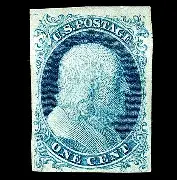
The number of different Scott numbers for the 1851 series 5-9, 13-16, 18-24, and 31-34 came from a group of dealers who were looking for more stamps for collectors to collect so they could sell more. After all, there were not very many different stamps yet in the 1860s.
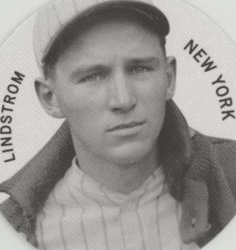
Most people know Fred C. Lindstrom (1905–1981) as the brilliant third baseman who entered the Baseball Hall of Fame in 1976. Far fewer realize that after his playing days, he went on to serve more than a decade as a respected U.S. Postmaster.
S. Berwick, ME 03908